 Dark
Dark

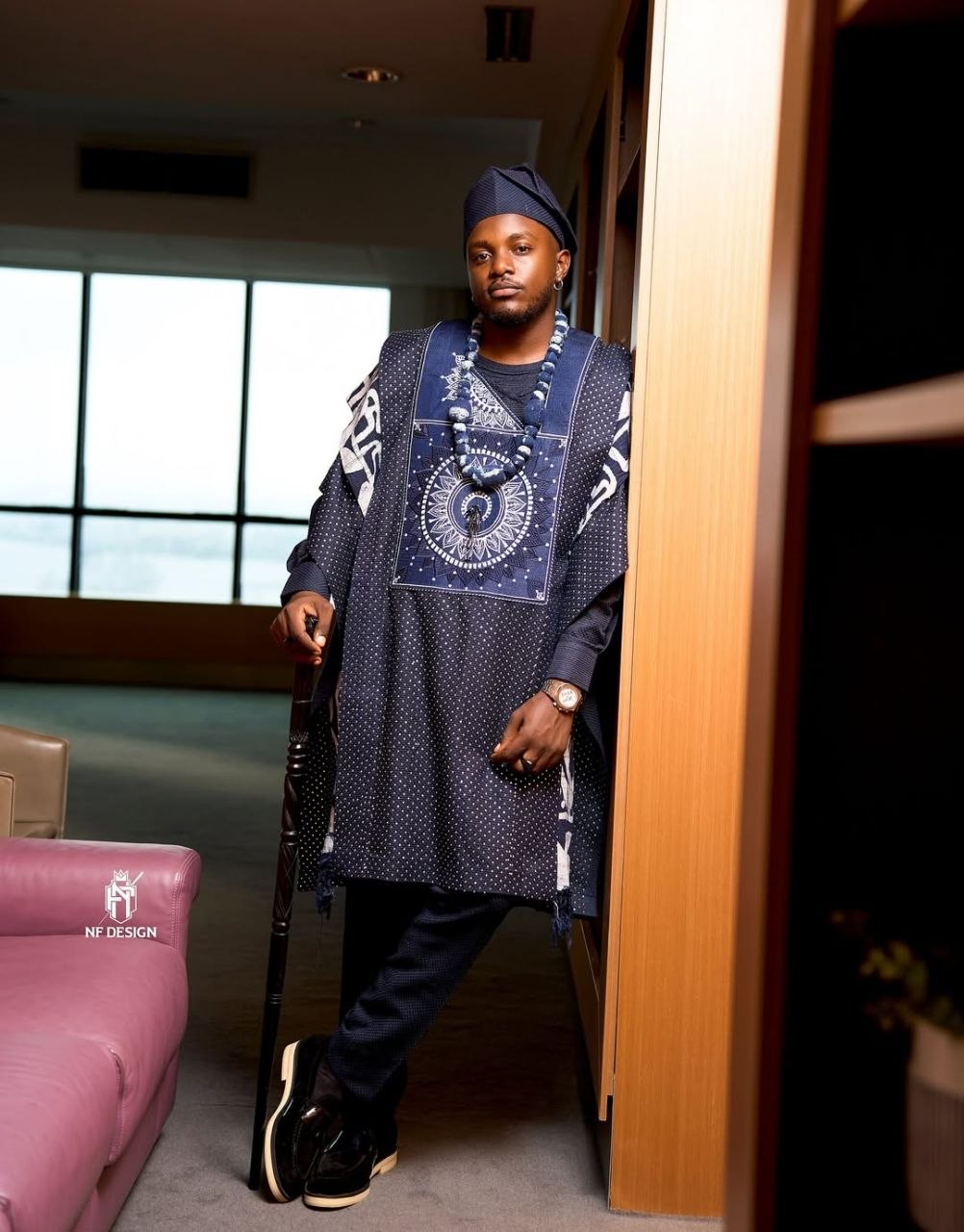
Every spider, every double gong, every diamond on your Toghu is a word in a visual language. The Grassfields people did not have a written alphabet – so they embroidered their laws, their history, and their values onto fabric.
Here is your decoder ring.
The Spider (Nsa)
Meaning: Wisdom, patience, and creation
The story: The spider weaves its web slowly, carefully, one thread at a time. Chiefs wear the spider to remind themselves that leadership requires patience – not force.
Who can wear it: Notables and above. In some chiefdoms, commoners may wear smaller spider motifs but never the full royal version.
The Double Gong (Mbe)
Meaning: Royal authority, announcement, gathering
The story: When the Fon beats the double gong, the entire village stops. It is a call to assembly, a warning of danger, or an announcement of celebration.
Who can wear it: Traditionally, only the Fon and his closest notables. Today, grooms may wear it on wedding days – because a wedding is a royal announcement.
The Crocodile (Ngando)
Meaning: Strength, resilience, and danger
The story: The crocodile lives in water and on land. It is patient, powerful, and deadly when provoked. Chiefs wear the crocodile to say: “Do not mistake my kindness for weakness.”
Who can wear it: Chiefs and warriors. In modern times, men of authority – judges, doctors, business owners.
The Stars/Diamonds (Tukia)
Meaning: Cosmic order, prosperity, and the heavens
The story: The stars guide travelers. They are constant, predictable, and infinite. Wearing stars means: “I am guided by something greater than myself.”
Who can wear it: Anyone. Stars are one of the few motifs without strict restrictions.
The Lizard (Mbu)
Meaning: Regeneration, adaptability, and survival
The story: The lizard loses its tail and grows a new one. It adapts to any environment. Chiefs wear the lizard to remind themselves that a leader must evolve.
Who can wear it: Notables and elders.
The Spear (Nkwu)
Meaning: Defense, bravery, and protection
The story: The spear is the Fon’s weapon. It represents the army that protects the kingdom.
Who can wear it: Warriors and men of action. Today, security forces and military personnel often choose spear motifs.
Why This Matters to You
If you wear a Toghu with random motifs, you are saying random things. But if you wear intentional motifs – chosen for your occasion, your status, your village – you are speaking clearly.
At NF Design 237, we do not guess. We ask your village. We consult our cultural advisors. And we embroider the right message.
👉 Let Us Tell Your Story – Order Custom Toghu
Summary: All 12 Blog Articles at a Glance
| # | Title | Category |
|---|---|---|
| 1 | The Royal Toghu – From the Fon’s Palace to the World Stage | Graffi Culture |
| 2 | Ndop – The Indigo Cloth of Kings and Secret Societies | Bamiléké Heritage |
| 3 | The Bamiléké Traditional Wedding – Rituals, Respect, and Royal Attire | Wedding Guide |
| 4 | Graffi Spirit – Who Are the Grassfields People? | Graffi Culture |
| 5 | 5 Mistakes to Avoid When Buying Traditional Cameroonian Attire Online | Shopping Guide |
| 6 | Toghu Care 101 – How to Make Your Royal Attire Last a Lifetime | Maintenance |
| 7 | From Hollywood to Yaoundé – 5 Celebrities Who Love Wearing Toghu | Pop Culture |
| 8 | 10 Reasons Why Every Cameroonian Should Own at Least One Toghu | Lifestyle |
| 9 | Inside the Atelier – A Day with Our Master Embroiderer in Bambili | Behind the Scenes |
| 10 | The Bamiléké Wedding Glossary – 15 Terms You Must Know | Wedding Guide |
| 11 | How to Spot Fake Toghu – 5 Signs You Are Buying an Imitation | Shopping Guide |
| 12 | The Secret Language of Toghu Motifs – What Your Outfit Is Really Saying | Cultural Deep Dive |


Laisser un commentaire